Total Pageviews

Showing posts with label Adoptee rights opponents. Show all posts

Friday, February 13, 2015

Adoption Lawyers Who Oppose Adoptee Rights

Another post by Jenn, Susan's daughter. Susan passed away on April 7th after an 8 month battle with Stage IV melanoma.

One afternoon this past August, while vacationing with Anthony and the kids at The Homestead in Virginia, I discovered The Private Adoption Handbook, by Stanley B. Michelman and Meg Schneider, on the bookshelf outside our room (a bookshelf populated with old hardcovers for purely decorative purposes). We had just gotten back from the pool and were waiting for Joseph, four years old, to open the door (which he insisted on doing), when the word "Adoption" on the book's spine caught my eye. I took the book down and began to read. The book, with chapters like "How to
The Homestead Resort, in Virginia.
Choose a Lawyer," "Placing the Ads [for a pregnant mother]," and "Choosing Your Baby," was the collaboration between a private adoption lawyer and an adoptive mother. I could not stop reading. For someone who ten years ago knew, like most of the American public, very little about how adoption really worked (despite having a mom who had been adopted), and who had recently been awakened to some of the incredible injustices tied in with adoption, the book was a window into a hidden world. Meg Schneider, the book's co-author, clearly wrote the book in order to help other couples who were dealing with infertility and seeking to adopt. It was a resource guide on how to do so. In the book, she is incredibly open about the pain she suffered because of her inability to have a biological child, and she also is open about the fierce love she feels for her adoptive children. At one point, she shares the story of how she and her husband finally adopted through the law firm of Stanley Michelman, the lawyer with whom she co-wrote the book:

"...I underwent the last surgical procedure. The news was bleak. It left us little hope of ever having our own biological child. I was surprised and horrified when the doctor told me the results of the exploratory surgery, as I had been led to believe, up until then, that I would probably be able to conceive and carry a baby to term. We were both very distressed, and I, in particular, felt miserably lost. Neal, however, who is always wonderful in a crisis and never one to let bad times do him in, called Stanley's office from a hospital phone booth before I even woke up from the anesthetic. 'I'm not going to wake Meg up with nothing but bad news,' he told an attorney working for Stanley. 'I want to tell her we're going to have a baby soon.' ... Stanley's assistant was comforting and positive. Basically she said, 'We'll help you out of this, and soon.' Three days after I got home from the hospital, I found out she was a lady of her word."

A page later, she writes, "That night Neil and I talked about the situation. We really couldn't find anything we didn't like about it. The only problem was a superficial one: The baby would probably not look like us. The builds and colorings of both birth parents seemed to preclude that possibility. Then we reminded ourselves that though I'm a brunette, my mother is a blonde and my grandfather was a carrot top. If we had conceived a child, anything could have happened..."

As I said, I could not put the book down, so each night once the kids went to bed I stayed up late reading, by the light of my phone, story after heartbreaking story of couples who were devastated when they could not have children of their own, and whose dreams then came true because of the law office of Stanley Michelman.

But all I could think about were all those adopted children. Children, like my mom, who became adults and deserved the right to be able to search out their history. I was astonished throughout the book at the casual way in which this need was dismissed, not even discussed. Or, if it was discussed, it was done so with only the needs of the parents in mind: "I have a photograph of her [her son's birth mother], but I would have liked to be able to tell our son about her voice and her words as well. Everyone has a history, and I know that a part of who he is has been left behind with his birth mother. Speaking with her would have given me yet another sense of him and where he came from, even though I know it couldn't make me feel any closer to him."

Oh, Stanley and Meg, how could you not have written here, after this clearly caring mother's story, about how that little boy would grow up and very well might need to search out that "part of him that was left behind with his birth mother"? How could you not have discussed legislation allowing adult adoptees access to their birth records? And, Stanley Michelman, how could you, with all of your years of adoption experience, not have supported such legislation? How could any adoption lawyer not support such legislation, when it is SO CLEARLY the best thing for adoptees? The book was published in 1988, after all. The information was out there.

When I got home from vacation, the book finished, I looked up Stanley Michelman, the adoption lawyer. He passed away in 2009, and I found myself feeling so conflicted as I read his obituary, which described him as a loving father and grandfather who, after losing a grandson, had become incredibly active in supporting research on childhood genetic diseases (irony of adoptees being blocked from knowledge of own genetic histories not lost on me). It also stated that he had finalized more than 5,000 adoptions. Next, I found his name on many, many posts on adoption.com. Birth mothers were looking for their children they had given up, and adoptees were looking for their original parents. Some were looking for siblings.

New York State, where Mr. Michelman practiced for years, could perhaps be the next state to allow adult adoptees access to their original birth certificates. The law pending, which has 90 sponsors out of 150 members in the NY State Assembly, would finally give adoptees, whose rights have been denied for so long, the right to search out that history, that "part ... left behind." So who's fighting against it? One group, and a powerful one, consists of lawyers just like Mr. Michelman. And people who have not taken the time to listen to adult adoptees' stories, stories every bit as important as those of adoptive parents, and those of birth mothers (and, dare I say, maybe, maybe, even just a little more important, if adoption exists, as everyone claims, truly for the benefit of the child, of the adoptee), are easily swayed.

May we only be swayed by the truth. May adoptive parents and adoption lawyers who do not yet realize the importance of this law open their eyes, and find their voice, and speak up for the adopted children they raised, or placed, who have now grown up and need this right. May people finally, finally listen to adoptees and hear what it was like to be adopted, and try to understand. May that understanding lead to action. That is my wish, and I know it was the wish of my mom. Truth and love. There is nothing greater, or more important.

-----------
One more thing:

Just tonight I came across an article online, "Birth mother privacy a concern as adoption bill moves forward" (http://wishtv.com/2015/02/12/birth-record-privacy-a-concern-as-adoption-bill-moves-forward/), an article about Indiana's pending legislation. The "expert" on adoption quoted in the article (and opposing adoptees' access to their original birth certificate) is another adoption lawyer whose wesbite, http://www.indianaadoption.com/, reminds me eerily of Stanley Michelman's book. I do not know why I continue to be astonished, but I am. How could this lawyer possibly believe that sealing records is best practice? How could he? Below is the comment I left:


My mom, an adoptee, had to use an "intermediary" like Mr. Kirsh mentions in order to attempt to find her birth mother 15 years ago. I hope Mr. Kirsh and his colleagues at Kirsh and Kirsh realize how insulting and demeaning it it for a grown woman to have to PAY and essentially beg another person, a stranger, for personal information. This should never be the case (and I have to imagine that Mr. Kirsh's opposition to laws allowing adoptees access to their original birth certificates --something that the American Academy of Pediatrics endorses -- has a lot to do with his profits from adoption and very little to do with his true concern for birth mothers, whether he realizes it or not). My mom's birth mother, when contacted by the intermediary, was one of those few who said she did not want contact. "She seemed like she was holding something back," the intermediary told my mom. Then she told her the case was closed and she could/would do nothing else. One phone call from a stranger and it was over. That is how these intermediaries (paid for their services) work. My mom, facing health issues at the time and also realizing, for the first time in her life, that it was her RIGHT to find her birth mother, and for the two of them to decide like the grown adults that they were whether or not they would have a relationship, found her mother on her own (and at great expense). She wrote her a letter in her OWN voice and sent it via certified mail. Though she and her birth mother did not go on to have a relationship, the interaction they had because of that letter was incredibly helpful to my mom, both medically and personally. It also helped her realize how ridiculous our current adoption laws are (that do not allow adult adoptees access to their original birth certificates). She became an advocate for adoptee rights and began to REALLY learn about the reasons the system is the way it is (lawyers who profit big time being one of them). Late in 2013, my mom was (somewhat miraculously) reunited with her two birth sisters (who happened to be desperately searching for her). What she learned revealed a mother who was both scared and scarred by the secrets she carried. "They kept it secret. That's how they came to peace with their decision," says Mr. Kirsh. He could not be farther from the truth, and if he truly cared about birth mothers, or adoptees, he would have to acknowledge that. Secrets will never lead to true peace. Only truth can do that. My mom wrote about this on her blog in July of 2013, right after she was diagnosed with Stage IV melanoma and right before she was reunited with her sisters:http://nanadays.blogspot.com/2....
After an 8 month battle with melanoma, my mom died last April, right before NJ's law allowing adult adoptees access to their birth certificates (beginning in 2017) was signed. I wish she could have seen it, but she did always say that "Change will come. I don't know if it will be in my lifetime, but change will come."
To the author of this article, I thank you for covering adoption and hope that you continue to do so. I feel strongly that, had you known, as a responsible journalist you should have revealed Mr. Kirsh's financial interest in promoting the status quo of closed adoption records when quoting him in this article. A brief visit to his firm's website confirmed that for me. The birth mother that his firm found for you was most likely "scared and scarred" like my mom's birth mother had been. Under Indiana's proposed law allowing adult adoptees access to their birth certificates, she would still have her privacy (the birth certificates do not become public record, after all). Someone with her best interests in mind would explain that to her (and, perhaps, gently encourage her to begin working towards true peace in her life, through the truth).

Thursday, April 17, 2014

The Myth of "Two Sides" in the Adoption Issue ... and a Thank You


This post (again, from Jenn, Susan's daughter) is a thank-you letter to all those who have listened, or will listen, to those who have lived adoption. Those who do so with an open heart and mind are hard-pressed not to be moved, but at the same time I recognize how difficult it is to change one’s own beliefs, especially if those beliefs are deeply held and reinforced by cultural myths perpetuated in movies, TV shows, magazines … in short, almost everywhere.  I also recognize just how busy with their own important affairs people are, and how hard this issue can be to understand (at first). So thank you, those who have listened, or will listen. Please bring your questions, your doubts, your fears …   but also your open heart. Prepare for an awakening. I know that’s how it felt for me, as I spoke with my mom and thought deeply about adoption for the first time.  

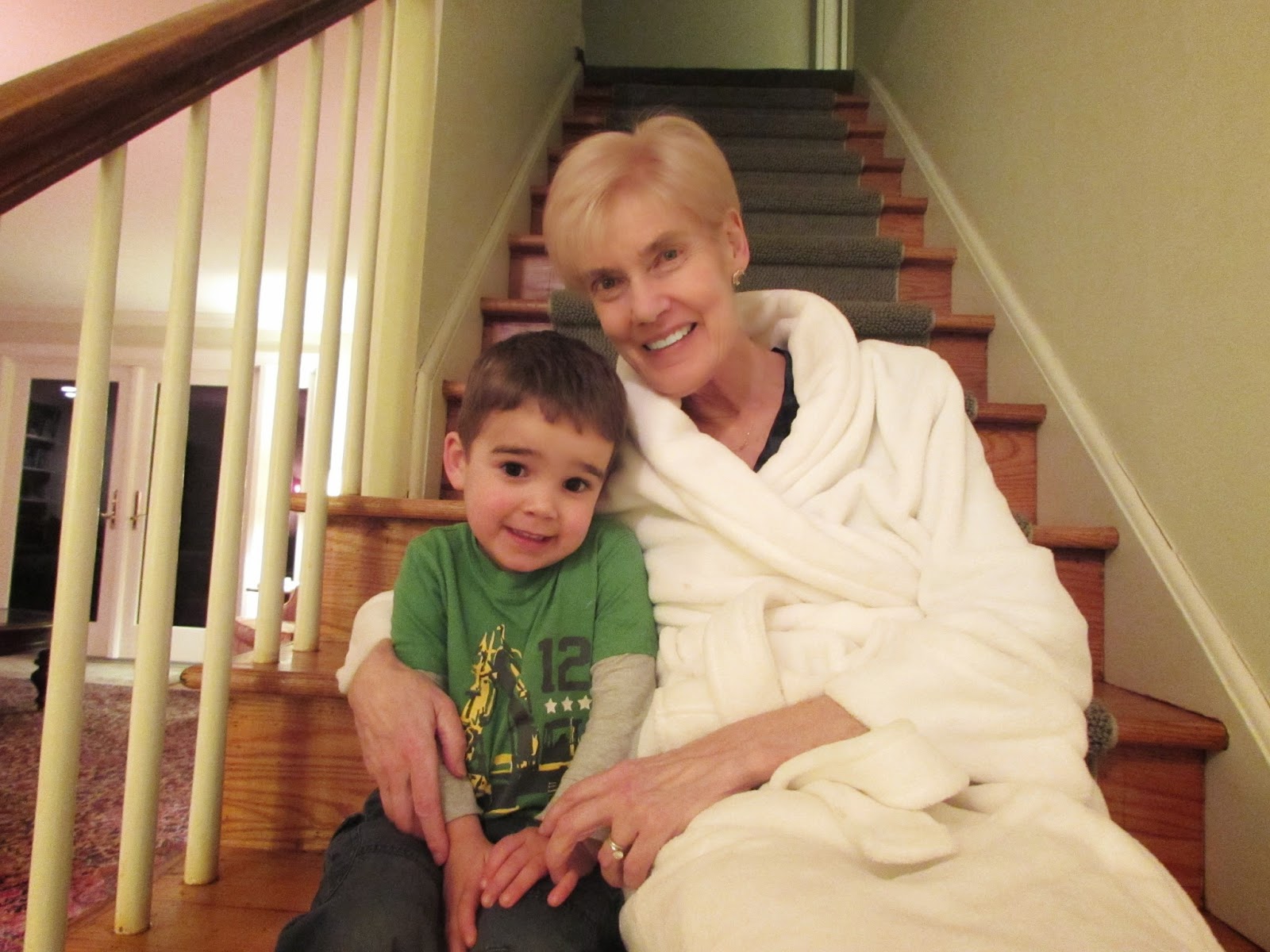
This photo, of my mom and my son Joseph, is from February 6th, after my mom, dad, and I had just had a good laugh as I attempted to color and style her hair, and almost turned it red. Going to the salon was just not possible at this point. I know now that my mom asked me to do her hair to create a memory (she certainly didn't ask me for my skills). I love her, and thank her, for that.


I especially want to thank Senator Diane Allen, who has tirelessly championed the Adoptees Birthright Bill (S873/A1259) in New Jersey and carefully listened to hours of testimony from original (birth) parents, adoptees, and adoptive parents for over 10 years. I am hoping that in the next month I will be able to thank New Jersey Governor Chris Christie, who despite previously opposing this bill and calling for intermediaries (they don’t work, and are insulting to adoptees), will listen to Senator Allen  and hear her compelling case for why this bill should be signed into law. Though many, many others have worked for years, even decades, for adult adoptees’ access to their original birth certificates, in my heart if this law passes in NJ I will consider it “Susan’s Law,” after my mom, who first got me to listen, and to reconsider my own views.

I also want to thank my dear brother-in-law, Harry. This past February I was at my nephew’s (his son’s) 12th birthday party, and as we served ourselves dinner from the dining room table buffet, he said, “That was an interesting article on your mom, Jenn.” He was referring to the front page February 23rd Philadelphia Inquirer article, Bills in Pa., N.J.. would open adoption records, which featured a picture of me, my mom, and my daughter Grace (http://articles.philly.com/2014-02-23/news/47607101_1_adoption-records-adoptees-original-birth-certificates ). The article covers all the reasons that advocates have been fighting for adoptees’ access to their original birth certificates, but it also includes a few quotes from those who oppose this access, namely Mary Tasy from NJ Right to Life and Patrick Brannigan from the NJ Catholic Conference. Though the article mentions that the NJ Bar Association and the NJ ACLU also oppose the law, nobody from these organizations spoke out. Harry, who I respect immensely and always love talking to, because he is thoughtful, well-read, educated, and open, went on, “I guess there are some really interesting points on both sides.”

At that point, I froze. My mom, who passed away April 7th, was at that time gravely ill, in part because of a lack of access to her full medical history, and the issue was just so personal. But I took a deep breath, explained the issue as calmly as I could, and Harry simply said, “Oh, that makes a lot of sense. I guess I just never thought about any of this before.” Most people who haven’t lived adoption are in the same boat. I am always glad when these people ask questions, or engage on the issue.


My sister Kate, my mom, and her sisters, Carol and Jo, having lunch at my parents' house in December. Those arguing for adoption reform: Adoptees, original families, and adoptive parents. They are the only "side" that should be considered.
Many times over the past two months I have come back to my brother-in-law’s comment, though, because if he (a well-educated, highly intelligent, deeply compassionate person, not to mention a psychologist with a PHD) could so easily be misinformed, how could others not be? “It seems like there are compelling arguments on both sides of the issue,” he said.

Yes, those who just read the press coverage of this and don’t deeply engage might be left with that impression but, let me state clearly, there are not two sides to this issue, any more than there were “two sides” to the issues of abolishing slavery, giving women the right to vote, or desegregating schools. A sampling of those who spoke out in favor of those injustices:   

Some defenders of slavery (and there were many) argued “that the institution was divine, and that it brought Christianity to the heathen from across the ocean, Slavery was, according to the argument, good for the enslaved” (www.ushistory.org).

Those who opposed giving women the right to vote were also, for years, given a voice in the debate (and they, of course, had the louder voice). “You do not need a ballot to clean out your sink spout!” read a pamphlet put out by the National Association Opposed to Women Suffrage in the 1910s, which also offered housecleaning tips.  Another reason given: “For it is unwise to risk the good that we have for the evil which might occur.”

Finally, those who fought against desegregation came up with all kinds of arguments to support their case. One of the most prominent lawyers to defend segregation, James Lindsay Almond Jr., the state attorney general of Virginia, claimed that segregation was just because “with the help and sympathy and the love and respect of the white people of the South, the colored man has risen...to a place of eminence and respect throughout the nation.” (www.si.edu.brown/history/5-decision/defenders )

In their day, all of these points were considered debate-worthy, and these issues were considered highly controversial, just as adult adoptees access to their original birth certificates is sometimes presented as a “controversial issue” in the press today. But it is not. The arguments of all those who oppose this law are just as myth-filled, fear-based, and flat out wrong as the arguments listed above.

 Are you here to listen, to learn, to consider your own previously held beliefs? Then I welcome you, and I thank you. Do you not yet see how this is a clear-cut issue of social justice, one that does not have two sides? Then I ask for your comments, and your questions. I (or perhaps someone even better informed than I am from the adoption community) would love to address them. I consider it a way to honor my mom, Susan Perry, who didn’t get to live to see this change come, but who fought so hard to see that it did.


Tuesday, April 17, 2012

Adoptee Rights, DNA, and the Opposition

Why is the importance of DNA recognized in virtually every area of life except for adoption?  University of California medical researcher Gregory Stock, who studies the make-up of genes for a living, writes that "genes are the biggest windows into who we are."  The U.S. Surgeon General encourages all Americans to learn more about their family health histories so that "your doctor can predict the disorders to which you may be at risk and take action to keep you and your family healthy."

Adoptees, of course, can see the impact of genes all around them.  My husband and I have two daughters: one looks like me, and the other looks like him.  One of my daughters is developing the same arthritis in her fingers that both my husband and his mother experienced.  One of my granddaughters looks just like her mother.  Another grandson looks just like his father.

But somehow, in spite of all the evidence to the contrary, we adoptees are supposed to buy the adoption myth that genes just don't matter.  Those folks who conceived you couldn't raise you, we're told, so just forget about them.  Somehow, they are a part of you, but that fact shouldn't concern you.  The only people who matter in your life are the parents who loved and raised you.

Now I care deeply for the parents who loved and raised me.  But why can't people see the logical inconsistencies in the common and oft-repeated assumptions listed above?  The data from those states that have opened their birth records to adult adoptees tells us that most original parents are quite happy to discover that their offspring have fared well in life.  It likewise tells us that the vast majority of original mothers are more than willing to share information that would help their offspring to live healthier lives.  Why then does the opposition remain so devoted to blocking Adoptee Rights bills that would enable those adopted, as adults, to secure their original records of birth?

Once the facts are acknowledged, the viewpoints of opposing groups like Right to Life, the Catholic Conference of Bishops, and state Bar Associations make no sense.  Right to Life assumes that more openness in adoption will lead to more abortions, but these assumptions have proven false.  There is no link between abortion and adoption, as many studies have shown.  In fact, the rate of abortions seems to decline when there is more transparency in adoption.  Kansas, for example, one of two states that never sealed the original birth certificates of adoptees, has always had a lower per capita abortion rate than any of the "sealed" states surrounding it.  Ten years of data from states that have opened birth records to adult adoptees likewise shows that there is no link between more openness and abortion rates.  Yet Right to Life continues to oppose Adoptee Rights bills; I can only conclude that their ideology blinds them to the factual data we've accumulated.  

Another group opposed to Adoptee Birthright bills is the Catholic Conference of Bishops.  Instead of granting adult adoptees the same right to access their original birth certificates that every other American enjoys, the Bishops suggest that we use mutual consent registries and confidential intermediary systems.  Once again, we have a host of studies showing that mutual consent registries are highly ineffective, and that confidential intermediary systems are demeaning and unfair.

If you are not adopted, try to imagine, for a moment, a complete stranger in charge of the most personal and intimate details of your life.  Imagine that stranger having access to your legal birth certificate and your personal history right in front of her, and then imagine that you are not allowed, by law, to see it.  To get to this point in your quest for information, you have had to pay a $400 fee. Some have questioned your psychological make-up and characterized your search for your own original parents as "idle curiosity."   I can't even put into words how insulting and disempowering some of these agency "confidential intermediary" programs really are.

The Catholic Bishops, perhaps, have good reasons for opposing Adoptee Birthright bills, but their purported concern for birth mother privacy is once again not supported by the facts.  Could the Bishops' opposition have more to do with the widespread scandals concerning unethical adoption practices that have recently surfaced in Australia, Ireland, Spain and Canada, and that are just now coming to light here in America?  Given the Bishops' track record on other social issues, the answer, sadly, I think is yes.

After the Catholic lobbies, the next significant group to oppose Adoptee Birthright bills is the state Bar Association.  Like the Bishops, bar association representatives testify that they are concerned about birth mother privacy.  They seem surprised to learn that hardly any original mothers say they do not wish to be contacted in the contact preference forms that states restoring adoptees' civil rights provide.  Even more significant is that they do not seem to care.  Could the opposition of the Bar Associations have more to do with the $30,000 to $50,000 fees that couples sometimes must pay to negotiate an adoption?  Again, as in the Bishops' case, it seems likely that the opposition is based on its own self-interest, and certainly not on "the best interest of the child."

Advocating for adoptee rights is frustrating and exhausting.  In the political arena, the voices of those actually affected by adoption are almost always overshadowed by the voices of those who profit from adoption, or those who base their opinions on unyielding ideologies, which are in turn supported by false assumptions.  Meanwhile, year after year, the civil rights of adoptees, who cannot afford the time or expense to lobby full-time, continue to be violated.

It is unjust to continue treating a whole class of people differently from all other Americans.  The state has no right to ban me from securing my own original birth certificate, or to try and obstruct me from knowing my own genealogy.  We need more adoptees, original parents, and adoptive parents to join the state-by-state movements to unseal birth records for adult adoptees.  We need to challenge pervasive adoption myths and acknowledge the facts. As human beings, we are products of our nurturing and of our DNA.  Every member of the adoption triad deserves to be treated with respect.  And adult adoptees must be recognized by law as the mature, autonomous people they are.