Total Pageviews

Showing posts with label adoption myths. Show all posts

Thursday, April 24, 2014

Justice for My Mom and All Adoptees


Another post by Susan’s daughter, Jenn. Susan passed away on April 7th, 2014, after an 8-month battle with melanoma. She was an ardent supporter of S873/A1259, aka the Adoptees Birthright Bill, now awaiting Governor Christie’s signature in New Jersey.
--
 
My family in San Francisco in 2001, visiting Kate, who was in her last year of medical school at UCSF at the time. As a doctor, my sister has always advocated for my mom having full access to her medical records. In 1997, because my mom didn't, she was blocked from a clinical trial after being diagnosed with Stage II melanoma. Intermediaries (proposed as a "compromise" by those who oppose the Adoptees Birthright Bill) do not work, and are insulting to adoptees. 

Earlier this week during a morning class, one of my students, Saaya, proclaimed suddenly, “It’s snowing!” We all looked to the windows. Indeed, gentle white flakes fell softly just outside. Snowing in Philadelphia in April? With surprise, I went to the window and looked up, then down. It took a moment – after all, it had been a very snowy winter -- but my mind finally saw what was really happening: white and light pink flowers, from the trees around the corner, were blowing in the wind. We had all been so sure, even in our surprise, that it was snow. But it was not. 

The image stuck with me. Sometimes in life we need to look closely, and not accept our first impressions, in order to see the truth. 

I wish mightily that the opponents of the Adoptees Birthright Bill in New Jersey would look closely at their own arguments and realize that they are gravely mistaken, to the peril of their own causes, and certainly to the great peril of those in the adoption triad. In New Jersey, a coalition of adoptees, original (biological) parents, and adoptive parents have fought for years for the end of sealed records, an archaic practice that does great damage to thousands of people in New Jersey, and millions of people throughout the United States. Governor Chris Christie has the chance to ameliorate this injustice by signing the Adoptees Birthright Bill now on his desk.  He and those who oppose this bill can best serve those who live adoption by recognizing what the Philadelphia Inquirer editorialized today saying: “The measure strikes the right balance: It enables adoptees to explore their pasts but preserves birth parents’ right to privacy despite evidence that most won’t insist on remaining anonymous.”
 
My mom and dad after their wedding in 1971. I look so much like my mom in this picture that when my daughter saw it she said, "Who's that man with you, mom?" When my mom reunited with her sisters this September, they came to her house with boxes of pictures, and we marveled at the resemblances.
The opponents are the NJ ACLU, the New Jersey Bar Association, New Jersey Right to Life, the National Council for Adoption, and the NJ Catholic Conference. Are you affiliated with any of these organizations? If so, please, please keep reading. And please work to help the leaders in those organizations to see the truth. Right now, they are seeing snow  -- and, in fact, spreading alarm about a giant, crippling “snowstorm” -- for flowers. 

One night in early March, when I had just returned home after spending the evening lying next to my mom in her bed, my heart heavy with the impending loss, and with how my mom was suffering, I decided to search for information on Marie Tasy, the director of NJ Right to Life, who had testified against this bill. Somehow I thought that if I wrote her a letter explaining what blocking the Adoptees Birthright Bill was truly doing to adoptees, and trying, once again, to get her to see that blocking this law did NOTHING, nothing at all, to convince women in crisis pregnancies to carry their pregnancies to term, as she erroneously believed, then maybe she would change her mind. As I said in the letter, I was praying for a miracle, and I continue to pray for that miracle. Of course, I also prayed for a miracle for my mom, and I know sometimes we must live with cancer that cannot be cured, or people who will not reconsider their deeply held (yet false) beliefs. But that doesn’t mean we shouldn’t try to cure cancer (or pray for a miracle), or try to help those who are wrong see the errors in their thinking. Right now, each time they show up at a hearing or post something online about opposing this bill, each time they refuse to listen to the compassionate reasoning of those who live adoption, it feels akin to each devastating CT Scan we got back over the last 8 months, showing us that my mom’s cancer was not responding to treatment.   

But it doesn’t have to be that way. We’re talking about people here, and people who, if they listen, could respond. They could change.  And the time for change is now....not next year or beyond.   Justice delayed is justice denied.   
My mom and me skiing, early 1980s. Later, she would teach my girls to ski as well. She was an incredible mom, and an incredible person. She never should have had to go through what she did to find her original family. No adoptee should.


That night in March, as I searched for how to send Marie Tasy of NJ Right to Life a letter, I came across a blog post written by Deborah Jacobs, Executive Director of the ACLU-NJ (Blue Jersey: Strange Bedfellows (and Pillowtalk) in Trenton) where she described testifying alongside Tasy against the Adoptees Rights Bill that Governor Christie conditionally vetoed in 2011 (it was similar to the current bill). She described this bill as a “hot, messy sausage,” claiming that by allowing adult adoptees to receive their original birth certificates “the privacy rights of birth mothers who do not wish to have their names revealed [would be compromised].”  Of course this is also what NJ Right to Life argues. The letter they urge their followers to send Governor Christie reads, in part, “S873/A1259 does not contain adequate protections for birth parents who placed children for adoption in the past and want continued anonymity. It also takes away the option of anonymity in future adoptions for women in crisis pregnancies who may only consider adoption if they can be guaranteed confidentiality.”

Privacy, confidentiality … there is no one who understands the desire for this better than adoptees, who, if they care to know the most private and confidential aspect of their lives (their own births! their own family history!) are forced to appeal to a complete stranger (the adoption agency, the intermediary, the state) to gain access. Adoptees are no danger to the “confidentiality” of an original (birth) parent. As my mom often said, why is an “intermediary” contacting an original birth parent any less intrusive then an adult adoptee doing so? Adoptees aren’t looking to take out full-page newspaper ads announcing the identity of their original parents to the world. They simply want, and need, the truth for themselves. 

My mom sledding with Genevieve and Eddie several years ago. She loved having fun with them, and they adored her.


Aside from that, I am highly skeptical of any agency today that says it cares about a woman in a crisis pregnancy that simultaneously assures her that she could, or should, remain completely anonymous for life from the child she brings into this world (or that this would be good for her). In today’s day and age, especially, with social media, any lifetime guarantee of anonymity is simply not true. And any agency that tells a woman this is possible, or that tells her she can “have a baby and forget about it” is not presenting her with the full truth. Adoptees who want to know who their original parents are must jump through hoops and spend large amounts of money to do so, but they often find their parents. And they do so in ways (Facebook campaigns, for example) that are much less “private” and “confidential” than a simple, direct inquiry from the adoptee herself would be. 

My mom only told my sister and me the details about her conversation with her original mother during these last months of her life, and we are her daughters, who have always talked with her about everything.  That part of her life was so personal, so deeply embedded in her heart, that she was hesitant to share it with even those closest to her. Here is what we learned: she took the call in her bedroom, with the door locked, and her hands trembling, because she knew this was most likely the only time in her life she would ever get to talk with her. Though my mom’s mother was not capable of having a relationship with her (a great loss for her, for sure), she was not harmed in any way by this contact. And please remember that she (an original mother who does not want contact with the child she has given up) is in the minority (less than 1%). Great harm is being done to thousands of adoptees in New Jersey, and for what? To protect myths about adoption that simply don’t hold up upon closer inspection.

My mom’s battle with melanoma happened to coincide with one of the longest, coldest winters in recent memory, but she did live to see the first spring flowers emerge.  In this season of flowers, of renewal, let’s honor my mom, and all those who have brought us closer to the window to see the truth of adoption, by passing the Adoptees Birthright Bill in New Jersey. How about it, Governor Christie?

Thursday, April 17, 2014

The Myth of "Two Sides" in the Adoption Issue ... and a Thank You


This post (again, from Jenn, Susan's daughter) is a thank-you letter to all those who have listened, or will listen, to those who have lived adoption. Those who do so with an open heart and mind are hard-pressed not to be moved, but at the same time I recognize how difficult it is to change one’s own beliefs, especially if those beliefs are deeply held and reinforced by cultural myths perpetuated in movies, TV shows, magazines … in short, almost everywhere.  I also recognize just how busy with their own important affairs people are, and how hard this issue can be to understand (at first). So thank you, those who have listened, or will listen. Please bring your questions, your doubts, your fears …   but also your open heart. Prepare for an awakening. I know that’s how it felt for me, as I spoke with my mom and thought deeply about adoption for the first time.  

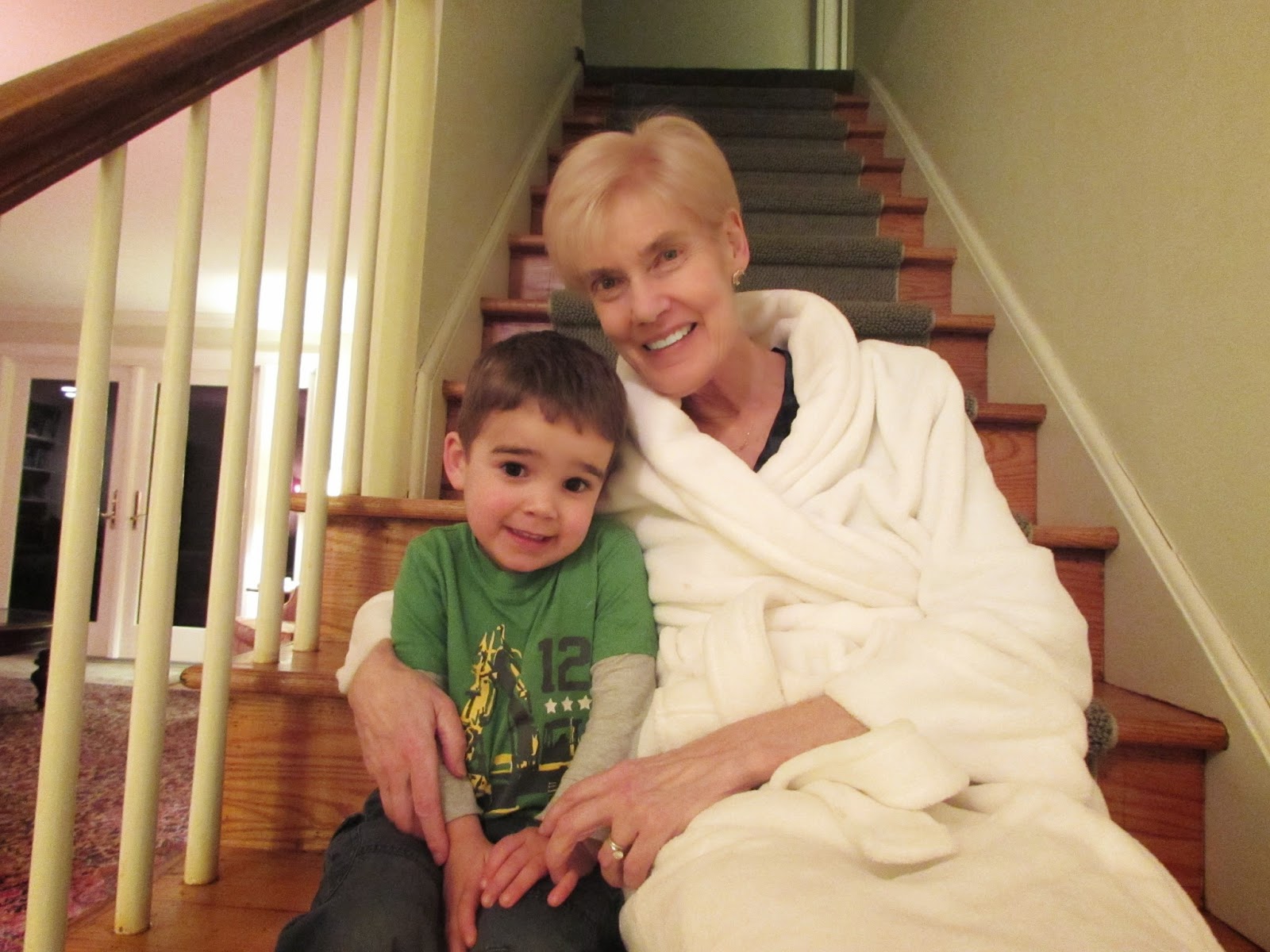
This photo, of my mom and my son Joseph, is from February 6th, after my mom, dad, and I had just had a good laugh as I attempted to color and style her hair, and almost turned it red. Going to the salon was just not possible at this point. I know now that my mom asked me to do her hair to create a memory (she certainly didn't ask me for my skills). I love her, and thank her, for that.


I especially want to thank Senator Diane Allen, who has tirelessly championed the Adoptees Birthright Bill (S873/A1259) in New Jersey and carefully listened to hours of testimony from original (birth) parents, adoptees, and adoptive parents for over 10 years. I am hoping that in the next month I will be able to thank New Jersey Governor Chris Christie, who despite previously opposing this bill and calling for intermediaries (they don’t work, and are insulting to adoptees), will listen to Senator Allen  and hear her compelling case for why this bill should be signed into law. Though many, many others have worked for years, even decades, for adult adoptees’ access to their original birth certificates, in my heart if this law passes in NJ I will consider it “Susan’s Law,” after my mom, who first got me to listen, and to reconsider my own views.

I also want to thank my dear brother-in-law, Harry. This past February I was at my nephew’s (his son’s) 12th birthday party, and as we served ourselves dinner from the dining room table buffet, he said, “That was an interesting article on your mom, Jenn.” He was referring to the front page February 23rd Philadelphia Inquirer article, Bills in Pa., N.J.. would open adoption records, which featured a picture of me, my mom, and my daughter Grace (http://articles.philly.com/2014-02-23/news/47607101_1_adoption-records-adoptees-original-birth-certificates ). The article covers all the reasons that advocates have been fighting for adoptees’ access to their original birth certificates, but it also includes a few quotes from those who oppose this access, namely Mary Tasy from NJ Right to Life and Patrick Brannigan from the NJ Catholic Conference. Though the article mentions that the NJ Bar Association and the NJ ACLU also oppose the law, nobody from these organizations spoke out. Harry, who I respect immensely and always love talking to, because he is thoughtful, well-read, educated, and open, went on, “I guess there are some really interesting points on both sides.”

At that point, I froze. My mom, who passed away April 7th, was at that time gravely ill, in part because of a lack of access to her full medical history, and the issue was just so personal. But I took a deep breath, explained the issue as calmly as I could, and Harry simply said, “Oh, that makes a lot of sense. I guess I just never thought about any of this before.” Most people who haven’t lived adoption are in the same boat. I am always glad when these people ask questions, or engage on the issue.


My sister Kate, my mom, and her sisters, Carol and Jo, having lunch at my parents' house in December. Those arguing for adoption reform: Adoptees, original families, and adoptive parents. They are the only "side" that should be considered.
Many times over the past two months I have come back to my brother-in-law’s comment, though, because if he (a well-educated, highly intelligent, deeply compassionate person, not to mention a psychologist with a PHD) could so easily be misinformed, how could others not be? “It seems like there are compelling arguments on both sides of the issue,” he said.

Yes, those who just read the press coverage of this and don’t deeply engage might be left with that impression but, let me state clearly, there are not two sides to this issue, any more than there were “two sides” to the issues of abolishing slavery, giving women the right to vote, or desegregating schools. A sampling of those who spoke out in favor of those injustices:   

Some defenders of slavery (and there were many) argued “that the institution was divine, and that it brought Christianity to the heathen from across the ocean, Slavery was, according to the argument, good for the enslaved” (www.ushistory.org).

Those who opposed giving women the right to vote were also, for years, given a voice in the debate (and they, of course, had the louder voice). “You do not need a ballot to clean out your sink spout!” read a pamphlet put out by the National Association Opposed to Women Suffrage in the 1910s, which also offered housecleaning tips.  Another reason given: “For it is unwise to risk the good that we have for the evil which might occur.”

Finally, those who fought against desegregation came up with all kinds of arguments to support their case. One of the most prominent lawyers to defend segregation, James Lindsay Almond Jr., the state attorney general of Virginia, claimed that segregation was just because “with the help and sympathy and the love and respect of the white people of the South, the colored man has risen...to a place of eminence and respect throughout the nation.” (www.si.edu.brown/history/5-decision/defenders )

In their day, all of these points were considered debate-worthy, and these issues were considered highly controversial, just as adult adoptees access to their original birth certificates is sometimes presented as a “controversial issue” in the press today. But it is not. The arguments of all those who oppose this law are just as myth-filled, fear-based, and flat out wrong as the arguments listed above.

 Are you here to listen, to learn, to consider your own previously held beliefs? Then I welcome you, and I thank you. Do you not yet see how this is a clear-cut issue of social justice, one that does not have two sides? Then I ask for your comments, and your questions. I (or perhaps someone even better informed than I am from the adoption community) would love to address them. I consider it a way to honor my mom, Susan Perry, who didn’t get to live to see this change come, but who fought so hard to see that it did.


Tuesday, July 23, 2013

In Life and in Adoption, History Matters

I have just returned from a three-week whirlwind tour of Spain with my daughter, her family and 30 high school kids.  Daughter Jenn, her three children, a dear friend of mine and I spent the first two weeks based in a Madrid apartment.  The last week, when all our husbands arrived, Jenn and her family stayed on in the apartment, while my friend and I with our spouses moved up a bit to a nearby Madrid hotel.  What an adventure we had visiting Barcelona, Segovia and Toledo, and touring all the highlights in Madrid -- the world-class art museums, parks, plazas, cathedrals and royal palaces.

To visit Spain is to witness the enduring aspects of history -- the aqueduct systems designed and built by the Romans, the old Jewish quarters that remain even after their inhabitants were driven out hundreds of years ago when they refused to convert to Christianity, the cathedrals and museums that house art from the Middle Ages and in some cases, artifacts that date to the time period before Christ.


                                      Grandaughter Grace by the Segovia Aqueduct

The fact is that before Christianity became intertwined with power and politics,  people from different faiths -- Muslims, Jews and Christians, lived together peacefully in Spanish cities like Toledo.  But from my perspective, the Christian faith became distorted when it was ordained the official faith of the land by powerful kings and queens.  The tolerance and understanding that had existed among different religious groups gave way to ultimatums and purges.

Today, we continue to see intolerance and a lack of understanding among some Catholic bishops in powerful leadership positions.  With all my travels this month, I haven't had time to post any articles on my blog.  But I remain dismayed that the Catholic Bishops in New Jersey continue to oppose an adoptee rights bill that would simply grant to adopted adults the same right to access their original birth certificates that every other American citizen enjoys.

While bishops in other states are beginning to testify in support of adult adoptee birthright bills, the  Conference of Catholic Bishops in New Jersey and New Jersey Right to Life continue to oppose such legislation -- and unfortunately base their stances on false information that has been disproved in every state that has restored the civil rights of adopted adults.

Even more depressing, the Conference this past spring hired Princeton Public Affairs Group,  a powerful lobbying firm, to represent its interests in the State Legislature.  The Bishops’ agenda in New Jersey includes opposing a bill that would extend the statutes of limitations on lawsuits for child sex-abuse cases and unfortunately, opposing the Adoptee Birthright Bill that was approved by the NJ Senate 30-8 on June 20 after it had passed unanimously 9-0, with one abstention, out of the Senate Health, Human Services, and Senior Citizens Committee.


The Bishops in New Jersey continue to insist that the issue revolves around “birthmother confidentiality,” even though the courts have ruled that no such legal right exists. The data from states that have opened birth records to adopted adults shows that most birthmothers -- 95 percent, by conservative estimates -- do want to know what has happened to their children.

Clearly, there is something else at stake here, that the Catholic Conference would spend an exorbitant amount of money to hire a prestigious firm like the Princeton Public Affairs Group to obstruct bills that would give a voice to those who for many years have had no voice.

According to the Newark Star Ledger, the firm’s founder, Dale Florio, Esq., is the “consummate Trenton insider.”  (The Auditor: Catholic Bishops Hire New Lobbyists, June 9, 2013)  In 2009, he was named one of the most influential people in the state in “The Power Issue” of New Jersey Monthly.  He served on the Finance Committee for Gov. Chris Christie’s successful gubernatorial campaign, and was key advisor to Christie Todd Whitman during her successful primary and general election wins in 1993 and 1997.

It is truly disillusioning to see the kind of power and money that is being enlisted to distort documented facts and promote the NJ Catholic Conference’s agenda.

Governor Chris Christie, as he campaigns for re-election and considers a possible run at the presidency, says he wants to be viewed as an independent thinker who takes action based on the truth and what is right, as opposed to what is politically expedient.

In 2011, Newark Archbishop John J. Myers, president of the New Jersey Catholic Conference, wrote a letter to Gov. Christie, asking him to “conditionally veto” a bill approved by the Senate and Assembly that would have given adopted adults equal access to their original birth certificates.  Unfortunately, Gov. Christie did just what Archbishop Myers requested.  (“Gov. Christie conditionally vetoes adoptee birth certificate bill,”  Susan K. Livio, Newark Star Ledger, June 24, 2011)

The question in the coming year, as the Birthright Bill moves through the NJ Assembly, is this:  Will Gov. Christie continue to defer to the church, and its powerful lobbying group, on this issue?  Or will he respond to the will of the elected Legislature and to the evidence that has been accumulated in states that have enacted Adoptee Birthright Bills?

We would hope that there is someone in his inner circle who would counsel the latter, especially as the Catholic Conferences in states like Michigan, Georgia and Ohio have now acknowledged the facts and testified in favor of Adoptee Birthright Bills.

Representatives of Dioceses that were formerly opposed to adoptee birthright bills in states that have since passed such legislation, like New Hampshire and Maine, now say the laws have caused no problems or adverse effects on adoption.  Marc Nutty of the Diocese of Portland, Maine, says. “We know of no problems or complaints and have been pleased with the outcome.”

Catholic Charities of Atlanta, testifying in favor of a pending Birthright Bill in Georgia, stated, “We believe strongly that Georgia-born adult adoptees should have their civil right to obtain a copy of their original birth certificate restored to them.”

Gov. Christie needs to know that there is more to this issue than what he is hearing from the New Jersey Catholic Conference.  In seeking good counsel, he might start by conversing with his fellow Republican, Senator Diane Allen, who has been sponsoring Adoptee Birthright legislation and hearing testimony on the issue for the past 17 years.

Following the committee hearing on June 13, during which 17 people testified for the bill and no one publicly testified against it, Senator Allen said, “It’s a civil rights issue, and it’s appalling to me that we treat (adopted) people so poorly.  We have made them a separate class, an inferior class, because they are adopted.  How absurd is that?”

In the coming months, as the Catholic Conference and its powerful lobbyists continue to promote the myth that birthmothers were promised and desire confidentiality from their own offspring, I hope legislators will look beyond the rhetoric, absorb documented data, and remember Senator Allen’s words.


Thursday, February 14, 2013

Overcoming the myths that thwart adoptee rights bills

All of us involved in the adoptee rights movement have heard comments like these:

"Why do you believe adoptees should have all the rights in the world and birth parents should not? You go on and on about how adoptees have had this traumatic experience because they were adopted, and I don't want to discount that pain for I'm sure it is real for some; however, I find it disgusting that you conveniently forget how traumatic giving up a child can be for a birth parent, and if a birth parent does not want to ever be found by their biological child, they should have that right."

To combat such attitudes, we share facts like the following:  Original parents have never had the legal right to anonymity from their own offspring.  Every state has some mechanism by which adoptee birth records can be opened by court order, and two states never sealed birth certificates from the adopted person at all.  Also, research conducted by law professor Elizabeth Samuels shows that birth records were not sealed to protect the anonymity of original parents, but to protect the adopted child from the "shame of illegitimacy" and the adoptive family from "unwarranted intrusion."

Many, many adoptees find their original families without their original birth certificates, because many have some identifying information on their adoption decrees.  Estimates indicate that some 40 percent of adoption documents contain some identifying data; both my brother and I, for example, always had our original names. This fact alone should support Samuel's conclusion that records were not sealed for the purpose of protecting birth parent anonymity.

The viewpoint that allowing adults to secure their own original birth certificates will endanger the well-being of birth parents assumes that there are hordes of original parents out there in the world who wish to remain in hiding.  The data from states and countries that have restored original birth certificate access to adult adoptees, however, shows that a tiny minority of original parents -- one to four percent -- express a preference for no contact. 

Some of the most ardent supporters for adult adoptee rights, in fact, are original mothers, who tell us they did not choose anonymity -- rather, it was forced upon them by the adoption system.  Carlynne Hershberger, both an adopted person and a mother who years ago relinquished her child to adoption, explains her viewpoint this way:

"As an adoptee AND a mother of adoption loss I have to say that the rights of the adoptee to know their origins trumps anyone else's right to keep secrets. When I was being manipulated out of my daughter I was not promised secrecy or anonymity. I was TOLD to keep secrets and TOLD not to look for her because it could cause her harm. What mother wants to cause harm to her child? Once we are all adults, we all have the right to choose who to have a relationship with. The government, adoption agencies, brokers etc... have no business being involved in whether or not two adults speak to each other or meet."

The adoption system has done a great disservice by pitting original mothers against adopted people, as if the two parties must have some kind of adversarial relationship, and as if the original birth were so shameful, it must never be spoken of or referred to again.  If the original parents placed us out of love, as so many of us were told, why would they wish to never hear from us again?

Julie J explains the view of many adopted people like this:  "Adoptees do not discount the pain of their mothers. This is not a pain that adoptees created nor chose for anyone. They are both victims of a larger societal system. Mothers & their children are largely on the same side, they are not adversaries as others with ulterior motives try to paint them. Let the mothers speak for themselves instead of having AP's or adoption industry reps speak for them. Listen to the mothers. They are not the ones speaking out against adoptee rights. Reunion often brings about a level of healing that is very healthy for all involved, mothers included."

It is, in fact, very difficult to get original mothers to speak out for the sealed record system, even through other parties.  For example, in its efforts to thwart adoptee rights bills, the New Jersey State Bar Association (NJSBA) has repeatedly asked for birth mothers desiring secrecy to allow their attorneys to testify on their behalf.   A letter sent out by the NJSBA on January 5, 2007, literally begs for original mother input.  It reads:

"Dear Family Law Section Member:

We are once again, requesting that anyone who has a client who is a birth mother, who would be willing to let you testify on their behalf in opposition to S-1087 (an adoptee rights bill), please contact ...

So far, only one person has come forward willing to have their attorney testify on their behalf.  This legislation has already passed in the Senate and is poised for Assembly vote in the near future.  We desperately need others."

You can see why adoptee rights supporters become so cynical, when facts like these are ignored year after year.  The evidence is clear:  No legal document has ever been produced indicating that original parents were promised anonymity, and most original parents, in fact, are open to contact from their surrendered offspring.

Even legal decisions from the higher courts have supported the rights of the adult adoptee to access her own birth records.   Here's what the Oregon State Court of Appeals decided in 1999, after a small group petitioned the courts to overturn the law that would grant adult adoptees equal access:  The state may release original birth certificates to adoptees "without infringing on any fundamental right to privacy of the birthmother who does not desire contact with the child."

If that decision isn't clear enough, the U.S. Court of Appeals (6th Circuit) said this in 1997, after another group petitioned the courts in Tennessee to overturn the law that would grant some adult adoptees access to their own birth certificates:  ..."If there is a federal constitutional right of familial privacy, it does not extend as far as the plaintiffs would like."  The Sixth Circuit Court further explains:  "A birth is simultaneously an intimate occasion and a public event -- the government has long kept records of when, where, and by whom babies are born.   Such records have myriad purposes, such as furthering the interest of children in knowing the circumstances of their birth."

So according to several court decisions, there is no constitutional right to privacy for original parents.  At this point, opponents to adoptee rights might concede:  All right, there is no legal right to privacy, and most original parents are open to contact.  But what about that one to four percent who want to remain undetected?

I would reply that a human being has a right to know his or her own origin, and that it is unjust and discriminatory to treat an entire class of people -- adopted adults -- differently by law than we treat everyone else.   Who does the birth certificate belong to, really, other than the adopted person herself?

Adoptee rights bills usually allow the original parents to express their preferences for direct contact, contact through an intermediary, or no contact.  This is an option that original parents don't have today, and reunions are taking place all the time.  Fair adoptee rights bills, like those enacted in Oregon, Alabama, Maine, New Hampshire and Rhode Island, enable the adopted adult to secure her original birth certificate and become aware of any preferences the original parents might have.

Adoptees don't have a right to a relationship with original parents, but they do have a right to information because their birth history is actually part of them.  Adoptee Julie J explains the concept this way:

"While there is a right to choose not to have a relationship with anyone else, there is not a right to remain anonymous to the son/daughter a woman chose to bring into the world. That is called a preference, and very few mothers have that preference. Preferences cannot trump basic rights. Once born, he/she is a full-fledged citizen with all the rights that everyone else who is already here has. Knowledge of family & relationships with family are 2 different things. Relationships always require the consent of both parties. Knowledge of who you are & where you come from is a human right that everyone deserves. It does not require the permission of anyone else. That being said, the overwhelming majority of mothers do support these ideas and are overjoyed to be reconnected with their lost sons/daughters."

The key point here is, "Knowledge of family and relationships with family are two different things.  Relationships always require the consent of both parties."  I often wonder what opponents to adoptee rights think the adopted person is going to do if the original mother says she does not wish to have contact going forward.  Like all human beings, we do not wish to go where we are not wanted.  When, we wonder, will full-grown adults -- original mothers and adopted people -- be left alone to work out their very personal issues on their own?

Many people do not realize that adoptees once enjoyed full access to their original birth certificates.  Records were sealed to adoptees only in the mid-twentieth century as part of the shame-based "Baby Scoop" era, and often in response to the desires of adoptive parents.

As Julie J explains, "Adoptees are not asking for any rights that everyone else does not already have. Our mothers already have access to their own accurate record of birth. Our AP's already have access to their own accurate records of birth. We once did. We only want that restored. Doing so does not take away anyone else's rights to theirs; it makes adoptees equal to the non-adopted."

Equal rights for adult adoptees.  It shouldn't be the novel and controversial subject it is in legislative circles.  And it wouldn't be, if only facts, rather than myths and emotion, would inform the debate.


You might also like:

Why do State Bar Associations Oppose Adoptee Rights?

ACLU-NJ Misses the Mark on Adoption

Sealed Records are Wrong. Period

Sealed Records -- A Secret the Industry Would Like to Keep